Before the White Cube: How Exhibition Displays Shape Looking
The changing art exhibition shows how salon walls, curated groupings, and open galleries shape what visitors notice, compare, and follow through a room.
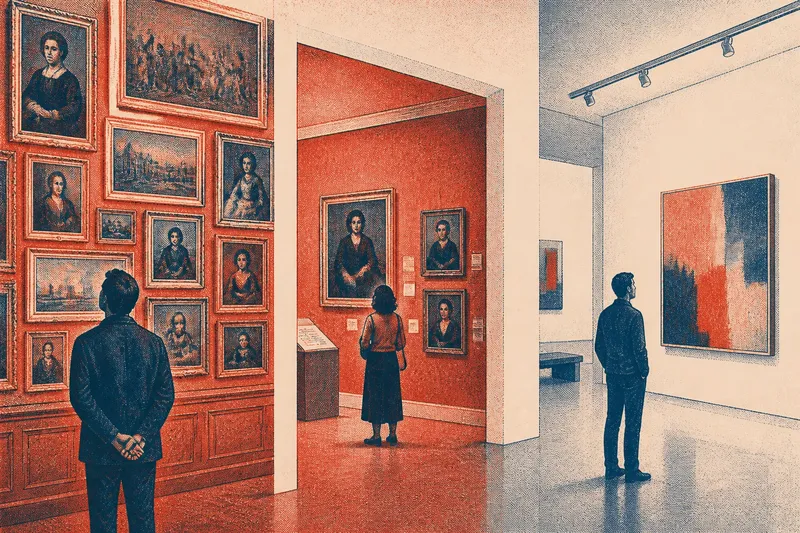
At a crowded salon, a visitor might look over a neighbor’s shoulder to see a painting hung high above the floor. In a spare gallery, the same visitor may have room to stand before one canvas. The changing art exhibition is visible in that difference: display shapes what visitors can see, compare, and follow through a room.
Dense salon walls, curated groupings, and the open gallery often called the white cube are useful ways to compare exhibition arrangements. They are not a simple sequence from old-fashioned to better. Each arrangement supports some kinds of attention and makes others more difficult.
Salon displays make abundance and comparison visible
In some European salons and other large public exhibitions, many works were hung together, often in tiers. The arrangement addressed a practical challenge: showing numerous works within the available wall space. A visitor encountered a broad field of images rather than a sequence of isolated objects.
That density invited comparison. A portrait beside a landscape made differences in subject, color, scale, and finish easy to notice at a glance. The viewer’s eye could move across the wall, pausing at one image and passing over another, though attention was divided.
Height affected the experience. Details in a work hung well above eye level could be difficult to inspect from the floor, while a lower work might invite a closer look. The arrangement influenced what visitors could readily examine, without determining what they would think of it.
Dense hanging can suit an exhibition that aims to convey abundance or make many works available for comparison. It can also reveal visual relationships without relying on lengthy labels. The trade-off is a busy field that asks visitors to set their own pace and route.
Curated groupings connect works through an idea
Exhibitions can group works by subject, artist, period, or visual relationship, but there is no single historical path by which all displays adopted these approaches. A thematic room might place several works together so visitors can compare a shared subject. In that arrangement, the placement itself offers a way to read the works alongside one another.
A label, room transition, or repeated motif can help visitors follow a connection without isolating every object. Curated groupings can hold enough works to suggest a conversation while offering clues about how to begin looking.
The trade-off is that an arrangement can steer interpretation. A visitor may be guided toward the organizing idea, even while remaining free to question it or notice relationships the curator did not emphasize.
Imagine a gallery grouping portraits from different periods around public identity. A visitor might compare clothing, pose, and background, then ask whether a portrait at the entrance complicates the theme. The arrangement gives comparison a starting point without dictating a single reading.
The white cube focuses attention while shaping the encounter
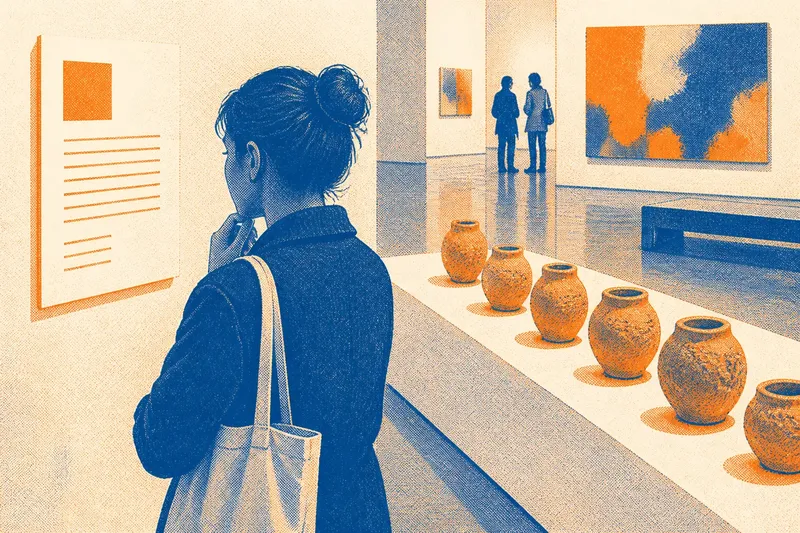
The white cube is a familiar gallery style, often associated with plain walls, restrained decoration, controlled lighting, and space around individual works. It can encourage viewers to concentrate on one object apart from everyday surroundings. The room may seem neutral, as though the art speaks without interference.
That impression of neutrality is itself shaped by decisions. Wall color, lighting, spacing, labels, and the route through the room all influence what visitors notice. Generous space can make a work feel prominent; a quiet room can make subtle surface details easier to attend to while leaving other context less visible.
An open display can suit works that benefit from close attention or a strong relationship between object and space. It may also make a visit feel calm and legible. The trade-off is that separating works can make comparison less immediate, while the spare setting can obscure the choices behind the installation.
Compare exhibition arrangements by the attention they invite
Each arrangement changes what is easy to notice. Dense walls invite scanning and side-by-side comparison. Curated groupings point toward relationships. The white cube makes an individual work easier to approach on its own, while the room still shapes that encounter.
Movement changes as well. In a dense display, a visitor may shift position to find a clear sightline or step back to take in the wall. A thematic arrangement can lead from one group to another. In an open gallery, visitors may pause, circle an object, or notice how others leave space around it.
These approaches can overlap. A dense display can include a focal point, and a white-walled gallery can present works in a connected sequence. To read an installation, notice what it makes easy to see and what it leaves in the background.
Which exhibition arrangement supports the kind of looking you want?
Why did some exhibitions hang many paintings together?
In some large exhibitions, many works were shown on the available walls, sometimes in tiers. This let visitors encounter and compare numerous works at once, though paintings hung high could be difficult to inspect closely.
Does a white cube make art easier to understand?
It can reduce visual competition and help a visitor focus on one object, but the room does not explain the work by itself. Spacing, labels, and lighting still shape what seems important or noticeable.
Why group artworks by theme?
A theme can make connections among works visible and give visitors a starting point for comparison. It also reflects a curatorial choice, which visitors can consider rather than simply accept.
Match the display to the kind of attention it supports
For a collection meant to show range and invite quick comparison, dense hanging may fit. For an exhibition organized around a question or relationship, curated groupings can offer a route through the material. For works that reward sustained individual attention, an open display may be more suitable.
When you enter a gallery, notice how close the works are, where labels sit, and whether the room encourages you to move or pause. The changing art exhibition becomes easier to read when installation is treated not as a neutral container but as a set of choices shaping what you see first and discover next.